

What Sound can Teach Us About Namewak
If you have read our content (we appreciate you by the way – yes, you!), you have learned several ways we study namewak (lake sturgeon). One way we study these fish is by tracking them using acoustic tags and acoustic receivers. If the word ‘acoustic’ makes you think less about fish science and more about singing along to Summer of 69 around a campfire, let’s dive in deeper.
So what does “acoustic” really mean here?
The word acoustic simply means “related to sound.” Although there isn’t an exact translation, acoustic can loosely be translated to nôhtâkwan in Moose Cree. When you hear someone talk about an acoustic guitar, they mean a guitar that makes sound on its own, without an amplifier or electricity. The sound comes from the vibration of the strings and the body of the guitar itself.
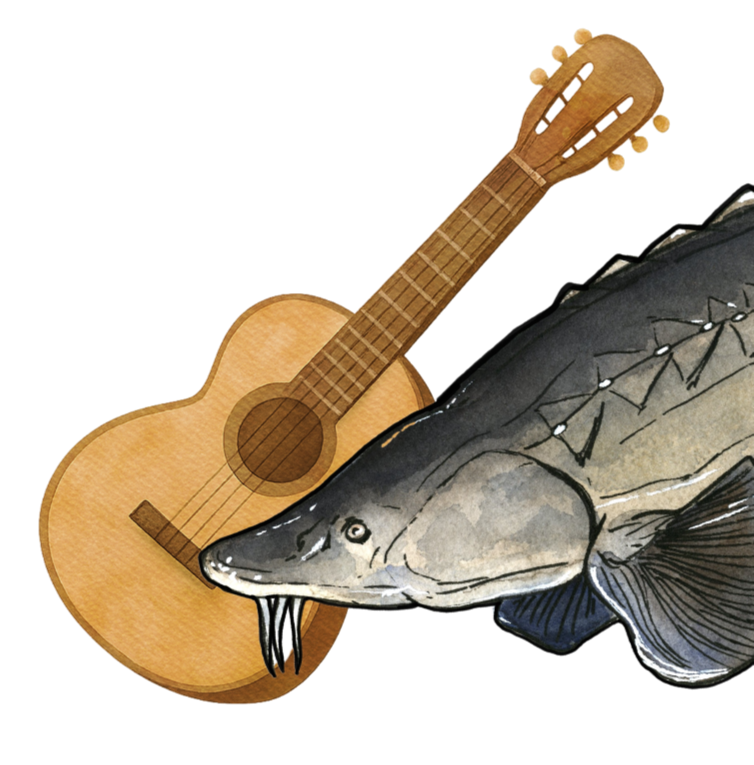
In our research on namewak, we use the same basic idea, but underwater. We attach a small device called an acoustic tag to a sturgeon. Acoustic tags come in a variety of shapes and sizes, and the battery life can last from days to upwards of 10 years. Acoustic receivers listen for acoustic tag sounds, and are placed underwater before tags are dispatched. The tag sends out a pattern of sound pulses through the water, kind of like a quiet, repeated ping. Each tag has its own unique pattern, so we can tell one fish apart from another, the same way you could tell two songs apart even if they were played on the same guitar.
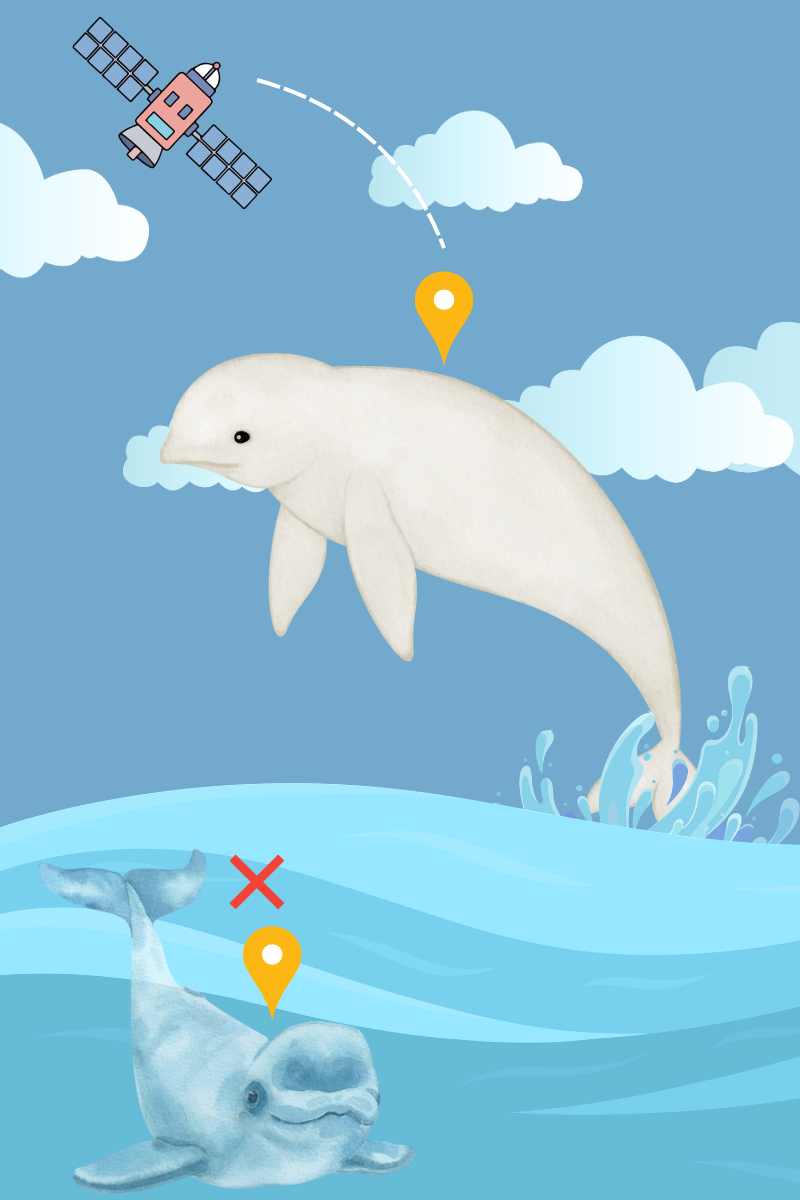
Why sound? Why not GPS or cameras?
I am so glad you asked! GPS signals, the same ones your phone uses to find the nearest gas station, do not travel well underwater. They don’t travel through the water to the sky to be picked up by satellites. GPS tags are used on surface-dweller animals like wolverine, which do get picked up by satellites! That being said, GPS tags are sometimes attached to whales, and the GPS tag will send all of the data when the whales surface to breathe. Cameras are limited by murky water and only capture what is directly in front of the lens.
Sound, on the other fin, travels very well through water. Sound travels significantly faster in water than in air. That is why whales can communicate across large distances in the ocean, and it is why acoustic technology works so well for tracking fish in rivers like the Mattagami and North French. While underwater guitar sounds more interesting now than it did before you started reading, I do not recommend submerging a guitar in water to test this theory, or you might not be able to use it again.

How does the tracking system work?
There are two main parts to the system: the tags and the receivers. The tag is a small device that a person will carefully implant in a namew’s belly. Once it is in place, the tag sends out its unique sound signal at regular intervals. The fish goes about its life, swimming, feeding, resting, and the tag quietly pings away. The good news is these fish cannot hear these pings don’t negatively affect namewak or give them a headache!
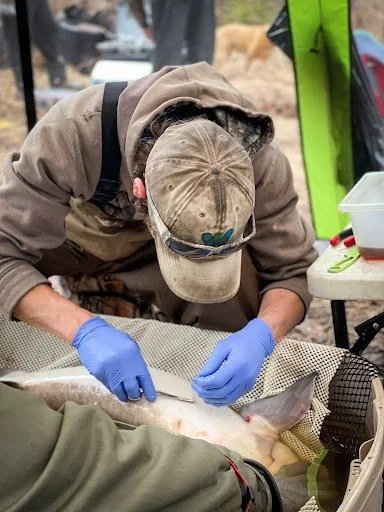
The receivers are devices anchored in the river at specific locations. Think of them as underwater microphones, always listening for pings. When a tagged namew swims close enough to a receiver, the receiver picks up the tag’s signal and records it along with the date and time. Some tags can even record how deep the fish is swimming or how active it is.
By placing a network of receivers along the river, we can piece together a story about where a namew travels, when it moves, and what habitats it prefers in different seasons. With multiple tagged fish, we can learn about the broader population and make inferences about their behaviour.
Why does this matter for namewak in the Mattagami and North French Rivers?
Namewak as a species are older than trees! They have been living in these river systems for thousands of years, and hold deep cultural significance to the Moose Cree people. Dams built in river systems change water flows, and that can affect where namewak are able to travel, where they spawn, and how they access the habitats they need to survive. We have learned that namewak behave differently in the dammed Mattagami river versus the free-flowing North French River.
Acoustic tracking helps us understand how namewak interact with these changed river environments. Are they finding their way to spawning sites? Are they getting swept downstream when they pass through hydroelectric facilities? Are they using different parts of the river in summer versus winter? The acoustic tags and the receivers that detect them give us some answers to these questions.
This information is essential to improve our understanding of the impacts of future development in these river systems in ways that support the connections between peoples, lands, and waters. Acoustic tracking is a quiet technology doing loud work for namewak conservation in the Mattagami and North French river systems!